GTA 6 Realism Debate: Fuel, Guns and Player Freedom
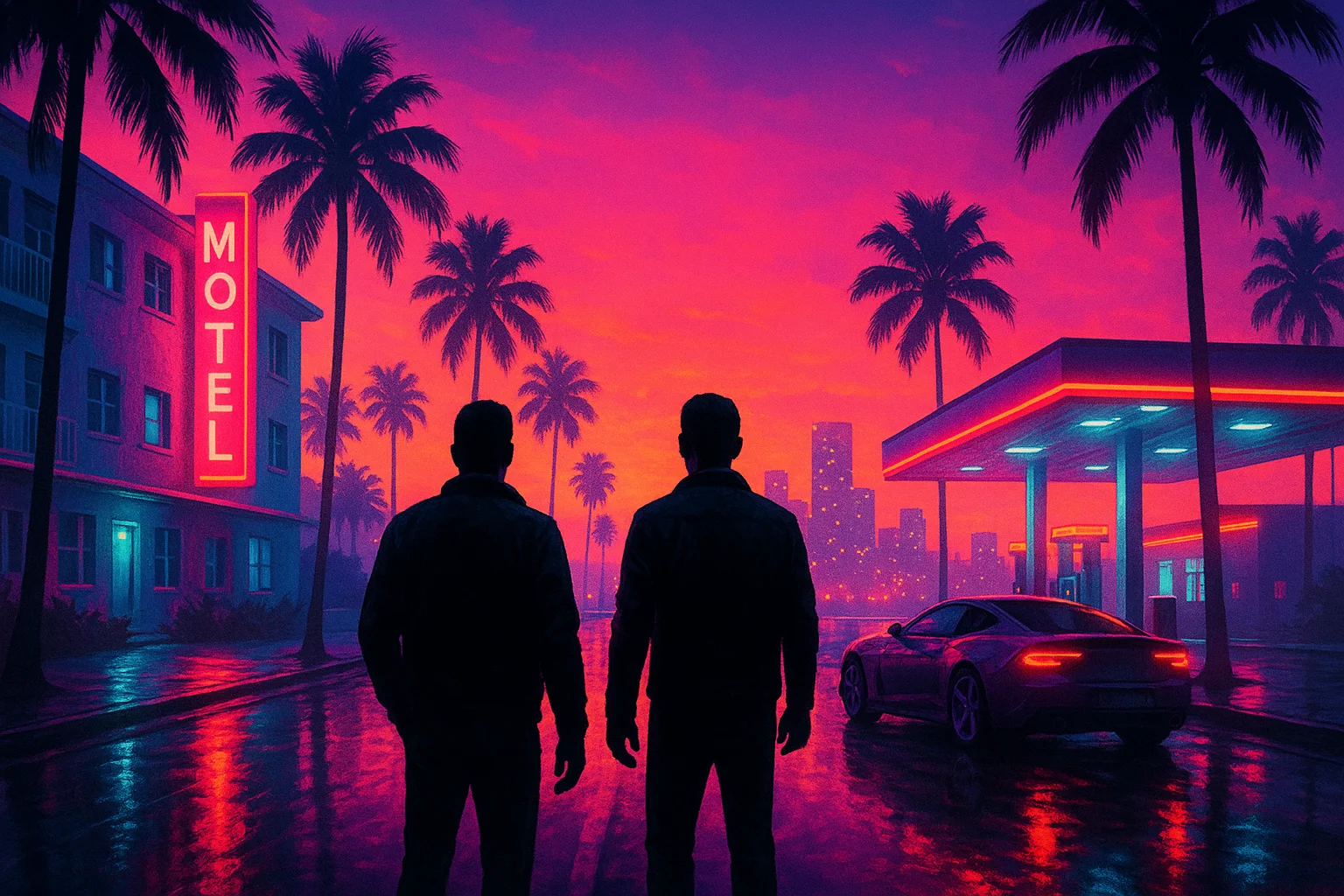
Grand Theft Auto VI is still more than two months away from release, but a relatively small set of newly discussed mechanics has already produced one of the sharpest arguments around Rockstar Games’ next open-world game. The subject is not its setting, its protagonists, its scale, or the inevitable promise of blockbuster missions. It is the ordinary stuff around them: stopping for fuel, carrying a gun in public, and navigating a world that may notice the difference between a concealed pistol and a rifle held openly in the street. For a series built on immediate access to stolen cars, weapons, and mayhem, those details naturally sound consequential.
The short answer to the question in the debate is that GTA 6 is not simply replacing player freedom with simulation. Based on comments attributed to Rockstar North co-studio head and development lead Rob Nelson during a preview shown to creator TGG, Rockstar is adding friction selectively. Cars can be repaired, refuelled, or recharged; the refuelling interaction is said to take roughly 10 seconds. Players can keep two handguns concealed, but long guns must be carried visibly. Civilians are intended to react differently depending on whether a weapon is on a character’s back or actively in hand. The final balance will depend less on the existence of these systems than on their frequency, their consequences, and whether they create interesting decisions rather than routine chores.
What is actually confirmed about fuel and weapons?
It is important to separate reported preview material from official product information and from the many unsupported GTA 6 claims that circulate online. Rockstar and Take-Two have officially confirmed that Grand Theft Auto VI launches on November 19, 2026, for PlayStation 5 and Xbox Series X|S. The official description places Jason and Lucia in Vice City and across the state of Leonida after an easy score goes wrong, drawing them into a conspiracy. Rockstar has not published a comprehensive mechanics list that lays out fuel consumption, weapon capacity, NPC response thresholds, or every condition that can trigger police attention. Those missing details matter because they are exactly what will determine how restrictive the systems feel in practice.
However, the reported comments from Nelson provide substantially firmer ground than an anonymous post or an old work-in-progress clip. GamesRadar and PC Gamer reported that TGG attended an extended Rockstar North preview overseen by Nelson. Their accounts say that gas stations can be used to repair a vehicle, refuel a combustion-powered vehicle, or recharge an electric one. According to TGG’s estimate, choosing refuelling starts a brief quick-time interaction and animation of around 10 seconds. Nelson reportedly asked, “Do you think people are going to like it?” and later defended the pace with: “Hey, that’s pretty fast for a fill-up. You can’t complain about that.” The comments make clear that Rockstar knows the feature could divide players.
The weapon changes are more specific. Nelson reportedly said that Jason and Lucia can always carry two concealed handguns. They can also carry two long guns, but not invisibly: one may be on the back and the other in an off hand. In his explanation, a long gun on a character’s back should generally be tolerated, while holding one makes nearby NPCs uncomfortable enough to move away. Nelson framed the decision as a response to the greater visual and behavioural credibility of GTA 6’s population, arguing that the old GTA 5 logic does not work “at this resolution” and with the desired “behavioral sophistication.” That is not a ban on firearms or a promise of real-world gun law simulation. It is a reported change to inventory presentation and civilian response.
A debate driven by friction, not simply realism
“Too realistic” is a useful headline shorthand, but it can obscure the real design dispute. Every open-world game decides which activities happen instantly, which require a small action, and which become persistent management systems. Fuel might be a visual stop that players make only occasionally. Or it might be a resource that can strand a player during a mission, limit which vehicles are practical, and make every long journey a calculation. Visible long guns might merely make pedestrians shift position. Or they might meaningfully escalate a police encounter, transform stealth, and discourage players from taking certain weapons into dense areas. Rockstar has confirmed neither the consumption rate nor the full penalty structure, so treating the reported systems as proof of an exhausting simulator would go beyond the evidence.
That distinction explains why the same information has produced opposite reactions. A player who wants the world to acknowledge their actions can see a fuel stop as a useful texture: gas stations become places with a function, a battered escape car becomes less dependable, and theft becomes a choice with consequences. A player who values Grand Theft Auto chiefly as an improvisational action playground can see the same stop as an interruption imposed between them and a chase, stunt, mission objective, or spontaneous detour. Neither response depends on rejecting realism in principle. The conflict is about whether a mechanic generates drama often enough to justify the time it asks from the player.
Nelson’s reported language suggests that Rockstar is thinking about that trade-off rather than blindly pursuing realism for its own sake. His question about whether players will like refuelling is notable because it acknowledges the design risk directly. His answer about speed is equally revealing: a 10-second interaction is being presented as a compromise. It is long enough to register as an activity with a bespoke animation and short enough, in theory, not to resemble a full simulation of standing beside a pump. TGG’s assessment was that fuel would not be a major issue unless players failed to think ahead, though that is the creator’s interpretation of a preview rather than a published Rockstar rulebook.
Why refuelling changes the meaning of stealing a car
Grand Theft Auto’s vehicle fantasy has traditionally rested on abundance. A car is transportation, cover, a stunt platform, a weapon, an escape route, and often an expendable object. The player can leave one behind, grab another from traffic, and keep moving. A fuel mechanic does not automatically erase that flexibility, particularly if tanks last a long time and stations are common. But it does introduce information that players may have to consider before committing to a vehicle. A flashy car with little fuel could be a bad choice for a robbery getaway. A reliable vehicle maintained by the player could become more valuable. A station on a route may become part of planning rather than background scenery.
The reported system also potentially changes the purpose of the places players already recognize in the world. A gas station is usually a landmark, a shop, a place to steal from, or a backdrop for chaos. If refuelling, recharging, and repair are available there, it becomes an operational node. That can improve immersion because the city’s infrastructure matters to play. It can also create vulnerability: a player may arrive with a damaged vehicle or a low tank at the least convenient time. The key unknown is whether Rockstar makes such moments exceptional and memorable or predictable and repetitive. Neither the available preview reports nor Rockstar’s public product pages say how quickly fuel depletes, whether missions override it, or how the mechanic behaves in different vehicle types.
The inclusion of recharging alongside refuelling is a particularly useful reminder that GTA 6 is not merely copying an older survival-game template. PC Gamer’s account says stations support recharging for electric vehicles and refuelling for internal-combustion vehicles. That suggests Rockstar is tying the system to the kind of vehicle a player chooses, rather than treating every car as mechanically identical. Yet the report does not establish charging time, battery range, pricing, availability, or whether the player can bypass either process. Those details should remain unconfirmed until Rockstar explains them or players can test the retail game.
The case for a fuel system
At its best, a resource system creates stories because it makes an otherwise easy choice imperfect. A player who steals the nearest vehicle after a job may discover it is damaged or low on fuel. Another may intentionally keep a familiar car ready for difficult missions. A detour to a station can introduce a moment of calm after a chase, or a new problem if police or hostile characters are nearby. In that sense, refuelling could help vehicles feel less like infinite-use props and more like parts of a living Leonida. The reported ability to repair vehicles at the same location reinforces that possibility, creating a compact service loop around condition and range.
It may also suit the stated premise of Jason and Lucia. Rockstar’s official description frames the pair as people forced to rely on each other after a score goes wrong in a conspiracy spanning Leonida. A crime story about dependence, escape, mistakes, and pressure can support systems that make equipment and transport matter. That does not prove any particular mission will require fuel management, and players should not infer such a feature from the narrative description alone. But it explains why the mechanic is at least thematically compatible with a game centered on two protagonists trying to survive the consequences of a failed opportunity.
There is also a production-value argument. Rockstar has positioned GTA 6 as the “biggest, most immersive evolution of the series yet.” In that context, a city full of detailed cars and service locations risks feeling inconsistent if a vehicle can be driven forever without any acknowledgement of energy or maintenance. Nelson’s explanation of the firearms system makes the same broader point: as environments and NPC behavior become more convincing, older abstractions can become visibly stranger. The strength of this argument is not that realism is always better. It is that a highly detailed world invites players to notice when its rules disappear precisely when they would matter.
The case against making a routine chore
The strongest objection is not that gas stations are inherently unfun. It is that Grand Theft Auto’s pace often comes from letting the player pivot instantly from one impulse to another. A chase can become a detour, a detour can become a mission, and a mission can dissolve into an unplanned encounter. Adding frequent refuelling risks placing a mundane administrative action at the center of that momentum. Ten seconds is brief in isolation, but time alone is not the whole issue. Players tend to remember interruptions most when they occur during failure, urgency, or a sequence that previously flowed without pause.
There is a related concern about failure states. If a stolen car runs dry in the middle of a getaway, some players may regard that as a satisfying consequence of poor planning. Others may regard it as a hidden punishment, especially if the game does not clearly communicate a vehicle’s remaining range before a commitment. The design can resolve much of that tension through generous warning systems, a slow depletion rate, alternate cars, accessible stations, or mission-specific safeguards. But none of those protections has been publicly detailed. The responsible conclusion today is not that GTA 6 will frustrate players with empty tanks; it is that the current information leaves the decisive usability questions unanswered.
Rockstar has encountered this broader tension before. PC Gamer noted that Red Dead Redemption 2 drew complaints from some players over simulation-heavy elements, including Arthur Morgan’s movement and saddlebag inventory management. Those mechanics also had committed defenders because they supported the game’s Western atmosphere and deliberate rhythm. GTA operates at a different speed, in a modern setting built around cars and quick escalation. That makes the comparison useful but incomplete. The lesson is not that Rockstar should abandon physical detail; it is that the studio must make each detail fit the tempo and fantasy of the particular series.
Visible firearms are a different kind of restriction
The gun system deserves separate treatment because its goal is not primarily resource management. It is social consequence. Nelson contrasted GTA 6 with GTA 5, where he said a protagonist could produce a shotgun “from nowhere” in front of people without an appropriate response. GTA 6’s reported approach asks the player to consider not simply which weapon has the best damage, but how its presence looks within a populated street. That is a potentially major change in tone. The world is no longer only reacting after shots are fired; it may react to the threatening signal created by an openly carried weapon.
The details also show that “gun restrictions” is an imprecise label. Nelson did not describe a system in which the protagonists cannot carry weapons. He described two concealed handguns that are always available, plus two long guns that can be carried visibly. The limitation is therefore about access, visibility, and public response rather than an elimination of heavy weapons. A player can still choose to carry two long guns, but doing so requires one to be on the back and another in hand, with NPCs reacting if the character moves through public space in that condition. This is a meaningful constraint, but it is not the same thing as a total loadout ban.
That approach has an obvious upside for role-playing and situational play. A concealed handgun can support a low-profile visit to a shop, a conversation, or a reconnaissance trip. A long gun may become a deliberate escalation chosen for a robbery, an ambush, or a confrontation. The apparent distinction between a weapon carried on the back and one held openly gives the player a further middle ground instead of a binary armed-or-unarmed state. The possible downside is friction in the opposite direction: players accustomed to switching instantly among a huge arsenal may feel constrained whenever they want a particular tool. Again, the eventual judgment will depend on how easily weapons can be stored, retrieved, and selected, information Rockstar has not fully published.
NPC behaviour is where the system could succeed or fail
Nelson’s core justification is not simply visual realism but behavioural sophistication. The reported examples are modest but specific: NPCs should generally accept a long gun worn on the back, while people who see one in hand may move away. GamesRadar also reported that police may antagonize a player waving a rifle around, based on footage shown in the Extended Look presentation. If these reactions are consistent, legible, and varied, they could make public spaces feel more responsive without forcing every armed encounter into an immediate wanted level. If they are unpredictable, overly severe, or easy to exploit, the system could instead turn into a new source of friction without delivering believable social behavior.
This is why the conversation should not be reduced to a comparison of GTA 6 and a real city. Realism in a game is always selective. GTA 6 remains a crime-focused action game in which players will take part in a story about Jason and Lucia, drive across Leonida, acquire vehicles, and use weapons. Rockstar’s own promotional language calls it the biggest and most immersive evolution of the series, not a daily-life simulator. The relevant question is whether its systems make player choices more readable and dramatic. A civilian backing away from an openly held rifle can communicate danger more effectively than a crowd that ignores it. The same mechanic becomes a problem only if it constantly blocks the kinds of playful experimentation for which the series is known.
From GTA 5’s abstraction to GTA 6’s presentation
GTA 5 remains the most direct comparison because Nelson explicitly used it as the contrast case. His criticism was not that players should never have powerful guns, but that materializing a shotgun in front of people with no reaction no longer matches the world Rockstar wants to build. That language indicates a shift from invisible inventory logic toward visible equipment logic. A player’s arsenal can become part of the scene: what is concealed is different from what is slung, and what is slung is different from what is actively brandished.
There is an important advantage in making that distinction clear. GTA 5’s instantly available weapon wheel was convenient because it kept action flowing, but convenience can flatten decisions. If every weapon is equally accessible at every moment, choosing an assault weapon before entering a crowded location has little cost. A more limited visible-carry model can make preparation meaningful. It may also produce a more coherent contrast between everyday exploration and overt combat. That said, no public report confirms the complete interface, the number of storage locations, whether mission loadouts override normal rules, or how quickly players can transition from one category to another. Any detailed claim beyond the two concealed handguns and two visible long guns would be speculation.
The vehicle system makes a parallel move. In a conventional arcade structure, a car is available whenever one is nearby. In the reported GTA 6 structure, a car may still be plentiful, but its condition and energy source can matter. Both systems work from the same principle: the world becomes more believable when objects retain state and when other characters respond to what they can see. The risk is that state tracking can overwhelm spontaneity. Rockstar’s challenge is therefore not to choose between realism and fun as opposites, but to make realism serve the immediate, mischievous, improvisational fun that defines Grand Theft Auto.
A timeline of the current discussion
- On November 6, 2025, Rockstar announced that Grand Theft Auto VI was set for a November 19, 2026 release date.
- On June 24, 2026, Take-Two announced pre-orders beginning June 25, confirmed a $79.99 Standard Edition, and reiterated the November 19 launch for PlayStation 5 and Xbox Series X|S.
- On August 27, 2026, Rockstar published Grand Theft Auto VI: An Extended Look as a featured Newswire item.
- By September 5, reports on TGG’s Rockstar North preview said refuelling or recharging was present and estimated the refuelling interaction at around 10 seconds.
- By September 7 and 8, reports of Nelson’s weapon explanation focused attention on concealed handguns, visibly carried long guns, and NPC responses to weapons held in public.
What players should and should not conclude now
Players can reasonably conclude that Rockstar is pursuing more contextual consequences around driving and weapons than GTA 5’s most abstract systems provided. The reported preview material supports the presence of refuelling, repair, recharging, visible long-gun carrying, concealed handguns, and NPC reactions to openly held firearms. It also supports the conclusion that Nelson understands fuel may be divisive and that Rockstar intends the refuelling interaction to be short. These are not internet leaks being retroactively treated as facts; they are claims attributed to a preview in which Rockstar’s co-studio head was present and commented on the mechanics.
Players should not conclude that GTA 6 forces constant refuelling, that every low-fuel car will ruin a mission, that carrying a rifle automatically produces a wanted level, or that weapons are broadly forbidden in public. None of those propositions is established by the cited reports. Nor has Rockstar announced a full PC release plan in the official material cited here; the currently confirmed launch platforms are PlayStation 5 and Xbox Series X|S. A feature can sound severe when stated as a rule and feel almost invisible when balanced generously, or sound harmless on paper and become irritating through repetition. Only the finished game can answer those questions.
The broader ecosystem: why small mechanics become huge news
GTA 6 is being examined at an unusual level of intensity because Rockstar says the Grand Theft Auto series has sold in excess of 470 million units worldwide. The game is also arriving after a long public gap between mainline entries, with GTA 5 serving as the explicit mechanical reference point in Nelson’s explanation. In that environment, a ten-second animation or a visible-rifle rule does not remain a niche systems detail. It becomes a proxy for what players expect the entire sequel to be: a freer, more reactive world for some; a slower and more demanding world for others.
The commercial context adds to that scrutiny. Take-Two’s June announcement set the Standard Edition at $79.99 and the Ultimate Edition at $99.99, while digital pre-orders receive a month of GTA+ and purchases before November 20 include the Vintage Vice City Pack. Rockstar Support also says the physical version contains a download code rather than a disc. Those policies are separate from gameplay design, but they reinforce why players will demand clarity before launch: consumers are not merely debating a hypothetical mechanic; they are making purchasing decisions around a major release with multiple editions and a confirmed November date.
Verdict: the balance matters more than the label
It is too early to say GTA 6 is too realistic for its own good. The evidence currently supports a narrower and more useful conclusion: Rockstar is testing a more grounded form of open-world friction. Fuel can make an escape vehicle a meaningful choice. Visible firearms can make crowds and public spaces react to threat before violence begins. Both ideas fit Nelson’s stated ambition for a more behaviourally sophisticated population. Both can also become tedious if the game applies them too frequently, communicates them poorly, or lets them override the spontaneity that players expect from Grand Theft Auto.
“We’ll see what people say. Do you think people are going to like it?”
That reported question from Nelson is the most honest summary of the situation. Rockstar has not presented refuelling and visible weapons as universally welcome features. It has presented them as parts of a more reactive world and, in the case of refuelling, tried to reassure players that the interruption is short. When Grand Theft Auto VI launches on November 19, 2026, the decisive test will be simple: do these systems turn ordinary moments into stories, or do they merely make players wait before getting back to one?
Comments · 2 comments
-
I’m curious what evidence there is that fuel and visible-weapon systems would necessarily restrict freedom rather than create new choices. The key technical question, for me, is whether fuel can be managed through optional settings or forgiving gameplay loops instead of becoming constant maintenance.
-
That seems like the sensible distinction: a system can add immersion if it is predictable, easy to read, and offers multiple ways to handle it. I’d hope any fuel mechanic would include clear indicators and convenient refuelling, while visible weapons would affect how NPCs react rather than simply preventing players from doing what they want.
-